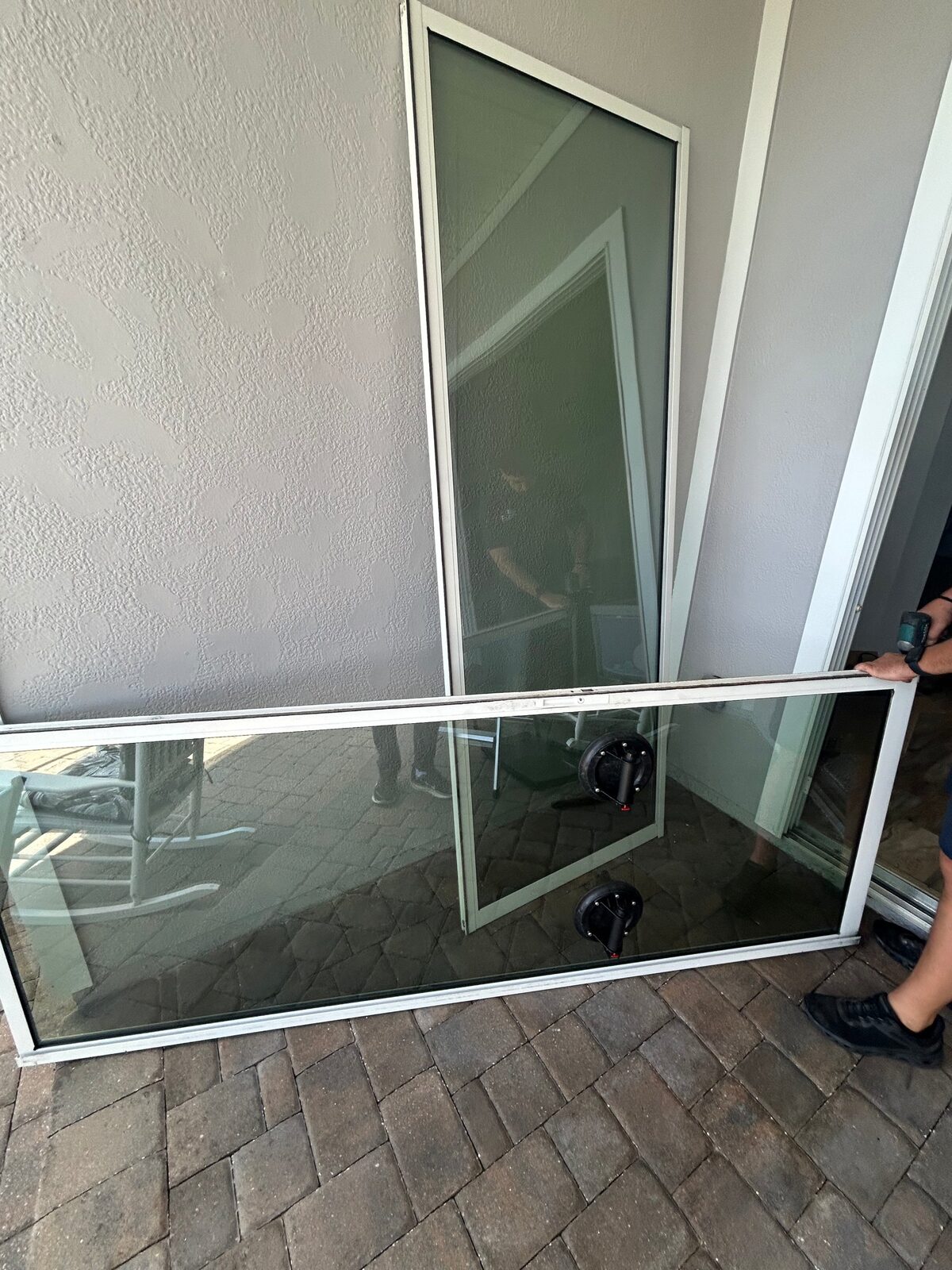
A line of fresh scraping along the lower frame is more than an annoying sound. It shows that surfaces intended to move with clearance are contacting, or that material has entered the travel path. Continuing to shove the panel can damage the sill, door or handle while hiding the reason it began dragging.
The useful starting point is to locate the contact. Is the bottom of the glass panel rubbing continuously, does one corner catch, or is a new rug or floor transition interfering with the handle-side stile? Each observation leads to a different inspection question.
For a Phoenix opening, dust can add resistance, but not every lower scrape is a cleaning problem. Support hardware, running-surface condition and recent work deserve attention before anyone raises the panel as far as the screws will allow.
Identify what is actually touching
Look at the door while it is stationary and take a close photograph of visible rubbing marks. A bright line on metal, disturbed finish or fresh debris can help locate contact. Do not reach beneath the panel or slide a tool under it while someone moves the door.
If ordinary movement is safe, note where scraping starts and ends. A continuous sound points toward a different contact pattern from a catch in one area. Record whether opening and closing produce the same effect, without forcing the door to complete a painful-sounding pass.
Check the room side as well. A mat, new flooring edge or object leaning against the panel can create an obstruction unrelated to the lower rail. Moving an obvious loose object is different from removing a permanent threshold component whose purpose is unknown.
Think about what changed before the scrape
Did the problem appear after new rollers, a repair cover, flooring work or weatherstrip replacement? Did it begin gradually with a panel that became heavier? Did a storm leave debris in the sill? The order of events can save a great deal of guesswork.
Photograph any new track covering or accessory without taking it apart. A changed running-surface height may affect the panel’s position. A new wheel housing may have a different adjustment range. Neither should be judged solely by whether it could be installed.
If the scrape followed a recent repair, give the installer a precise description of what remains. “The handle side contacts the sill during the first foot of closing” is actionable. “The whole door is bad again” loses information about the location and direction of the fault.
Remove loose debris, then reassess
For a stable panel with intact glass, vacuum accessible loose particles and wipe gently using approved care methods. A small stone or compacted ridge can reduce clearance locally. Keep the cleaning controlled; pouring water into the sill adds another variable.
If the sound disappears and normal movement returns, watch whether debris repeatedly collects at the same spot. If the panel still drags, stop escalating the cleaner strength. A clean surface cannot compensate for an incorrectly positioned panel or failed support assembly.
Our desert track-cleaning guide explains that first pass. If a raised or damaged rail is visible, the fixed-stop guide is a better next step than assuming all lower rubbing comes from low roller adjustment.
Roller height is a setting within a system
Some sliding doors allow panel height to be adjusted through the roller assemblies. Pella’s aluminum sliding-door instructions, for example, specify the rollers and access method for that particular system.[1] Those details demonstrate why adjustment must follow product identification.
The target is correct panel position, support and clearance. Raising one corner may remove its lower scrape but tilt the panel so it no longer meets the jamb properly. Raising both corners too far can create contact at the upper frame or affect retention.
Do not confuse an attachment screw with an adjustment screw. A generic video may show hardware unlike yours. If the adjustment is at its limit, the housing is damaged or the correct part is uncertain, more turning is not an appropriate diagnostic method.
Check panel alignment and closing behavior
Observe the gap beside the slightly open panel. A tapered gap can indicate the panel is not parallel with the jamb. Andersen includes this comparison in its gliding-door adjustment guidance.[2] It should be considered alongside lower clearance and the actual support condition.
After any correction, the door still needs to close and latch normally. A panel that clears the sill but requires lifting at the handle has not achieved a satisfactory operating position. Ask for the full travel and closing relationship to be checked together.
If the gap cannot be made appropriate without contact elsewhere, the frame geometry or hardware suitability may deserve investigation. That is a different scope from routine adjustment. The article on an out-of-square opening explains what gap patterns can and cannot establish.
The sill may need more than a surface treatment
A moving, distorted or poorly supported sill can change the wheel path and the available lower clearance. The door may scrape in a location that shifts as the panel travels. An inspection should evaluate the base assembly rather than covering its visible wear automatically.
Installation guidance is product-specific because support and attachment details form part of the working door system.[3] If work is proposed at that interface, ask what is being restored and how drainage and adjoining finishes will be handled.
Avoid filing the panel bottom, grinding the sill or removing a guide to create space. Such changes can affect more than the rubbing location. A defined repair should establish why the contact occurs and correct the cause without sacrificing required components.
A simple way to compare proposed repairs
Ask each provider to identify the contact, the cause and the verification. “Raise the door” describes an action. “Restore the intended panel position using serviceable, correctly matched assemblies, then verify clearances and latching” describes the outcome you need assessed.
Where parts are recommended, ask whether the rail is sound and whether the adjustment mechanism remains usable. A worn wheel can lower the panel; a different track height can change its position; a frame problem can limit the available range. The inspection should distinguish those conditions.
The least expensive useful repair is the one that addresses the established fault. It may be alignment adjustment, roller replacement, track repair or sill and threshold repair. The correct choice should come from evidence at the opening, not a blanket rule about Phoenix doors.
After the work, watch the former contact point
Run the panel through normal travel with the technician present. Check for a remaining scrape, fresh debris or a contact line. Confirm that the handle does not need to be lifted and that the lock engages in the ordinary manner.
Keep a photo of the repaired area and note any agreed follow-up observation, such as afternoon operation. If a fault changes with natural temperature conditions, that comparison is useful. Repeated owner adjustments between observations can make the result harder to interpret.
Can I sand the bottom of the door?
Do not treat a glazed sliding panel like a simple sticking interior timber door. Its rails, seals and clearances belong to a designed assembly. Have the source of contact identified before removing material.
Why did scraping begin after a track repair?
The finished running surface and roller setting may need review, or an underlying problem may remain. Report the exact symptom to the installer. The timing is useful evidence, but an inspection is needed to establish the cause.
Is lower scraping always a roller problem?
No. Debris, accessories, altered surfaces, sill condition and frame geometry can also be involved. A stable, correctly aligned panel and a suitable running path must be considered together.
Call Saguaro Sliding Doors at 602-560-4705 for sliding door repair in the Phoenix area. Mention where the lower scrape occurs and any recent changes so the service visit can focus on the actual clearance problem.