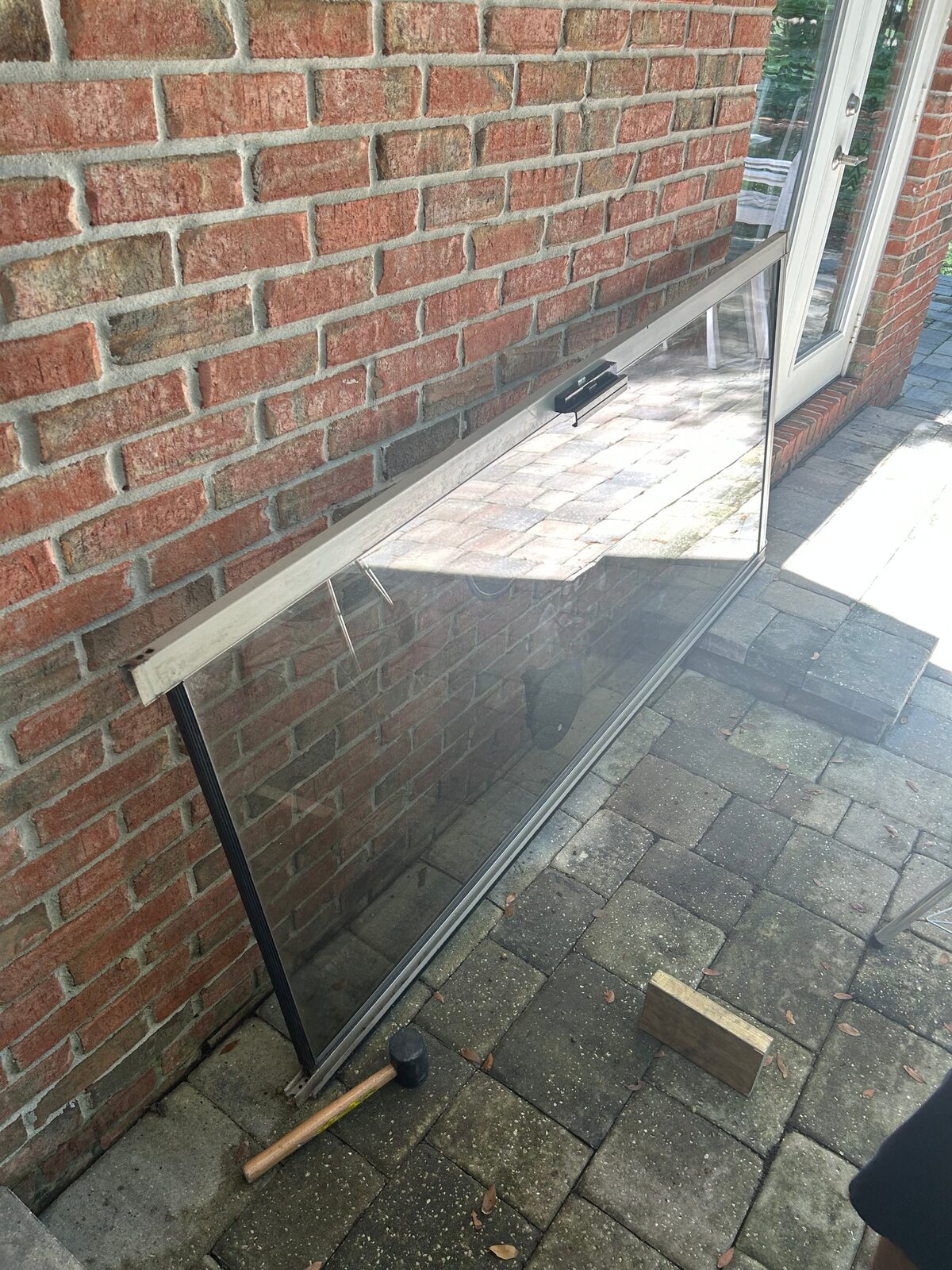
An uneven gap can explain why a sliding panel reaches one corner before the other, rubs during travel or refuses to lock normally. It does not, by itself, establish that the entire frame is damaged or that the house has a structural problem.
The moving panel, its support hardware, the running rail and the surrounding frame all contribute to the relationship you see. A tilted panel inside a sound opening can resemble a frame fault. A distorted opening can also limit what ordinary roller adjustment can achieve.
The useful approach is to document the geometry without trying to force it into a diagnosis. For a Phoenix home with an older aluminum slider, a newer vinyl unit or a large multi-panel system, identification and actual contact matter more than assumptions about the material or neighborhood.
Begin with the visible gap pattern
With a stable panel slightly open, observe the relationship to the closing jamb from a normal standing position. Is the gap visibly tapered, relatively consistent or interrupted by a loose seal? Photograph the top and bottom as well as the whole opening.
Do not turn a photograph into a precision survey. Perspective, trim and a camera held at an angle can exaggerate a gap. The image is a clue that helps organize an inspection, not a conclusive measurement of the frame.
Andersen’s adjustment guidance uses panel-gap comparison for identified gliding doors.[1] The observation is useful because it connects the panel’s position with the jamb. The next step is to establish which part of that relationship is responsible, not automatically to move the nearest receiver.
Separate the panel from the opening
A low corner can result from a worn or incorrectly set support assembly. A raised or damaged rail can affect the position during travel. A panel itself can also be damaged. Those possibilities deserve attention before concluding that the surrounding frame is out of square.
Ask whether the gap changes as the panel moves. Does a corner start clear and then rub? Does the panel approach the jamb at an angle even though its earlier travel is smooth? Record the actual behavior without trying to hold the panel level by its handle.
If the panel is unstable or glass is damaged, stop operating it. A controlled professional inspection can establish its support and condition. A homeowner should not remove or lift a heavy glazed panel merely to make a gap comparison easier.
Look for evidence at the sill and header
Photograph visible distortion, loose sections, rubbing marks and unexplained gaps around the frame. Note whether the sill appears to move during ordinary operation, but do not push on the frame to test its attachment.
The sill, jambs and header are parts of an installed system. Product installation guidance addresses the opening and support relationships for specific configurations.[2] If those conditions are not sound, a roller setting may be unable to compensate appropriately.
A surface repair can be useful for a suitable rail defect while leaving a broader support issue unresolved. Ask the provider to distinguish the running surface from the sill assembly and the surrounding opening. The words “track” and “frame” should not be used interchangeably when they imply different work.
Recent changes help locate the problem
New flooring, a track cover, roller replacement, weatherstrip work or a relocated receiver can change operation without changing the building opening. State what happened and when the symptom appeared.
If the door began rubbing immediately after it was raised, review the resulting upper clearance. If it now locks only after the receiver was moved repeatedly, review the panel support and original approach. A sequence of compensating adjustments can conceal the first fault.
The post-roller-replacement guide explains how to compare completed work with remaining symptoms. A frame diagnosis should account for that history rather than treating every visible uneven gap as evidence for replacement.
Phoenix heat can change the complaint’s timing
Document morning and afternoon behavior when the panel can be operated safely. A fault that changes with natural exposure may justify checking clearance under those conditions. It does not establish a specific amount of thermal movement or prove that the frame material is unsuitable.
If the door is heavy all day, report that alongside any afternoon worsening. The baseline condition matters. A persistent rubbing line should not be dismissed as a weather effect simply because the property is in Arizona.
Avoid cooling the frame with water, using a heat gun or attempting to bend components while warm. Those experiments change the condition without locating the cause. The afternoon-sticking article provides a safer observation method.
Know the limit of a door inspection
A door technician can document the opening and identify conditions affecting the door. Unexplained movement extending beyond the assembly, significant new building cracks or other structural concerns may need an appropriate building professional.
A sticking patio door alone cannot establish a foundation diagnosis. Nor can an online article determine whether a visible wall crack is related. Keep the report factual: observed gap, rubbing location, frame condition and the limits of the inspection.
This distinction protects the usefulness of the service recommendation. You need to know which work can be addressed within the door and which conditions require separate evaluation before an effective repair or replacement can be specified.
Compare adjustment, frame repair and replacement
Alignment adjustment addresses an appropriate setting within a serviceable system. Frame repair addresses an identified damaged or displaced component where a suitable repair is available. Sliding door replacement involves a broader installed assembly and its interface with the opening.
Ask what each proposal assumes about the sill, frame, panel and parts. A low price that excludes the actual support problem is not comparable with a complete correction. A replacement proposal should also explain how the underlying opening condition will be addressed.
Manufacturer modification guidance cautions against unsupported changes to designed products.[3] Grinding contact surfaces, bending a jamb or removing required pieces to obtain clearance should have a specific technical justification, not be treated as a routine alternative to diagnosis.
What measurements should accomplish
You do not need to prescribe a technician’s measuring method. Ask what the measurements show about the opening and panel relationship, whether adjustment can produce appropriate clearance and whether any uncertainty remains until components are exposed.
Measurements should support the proposed scope. A statement that a frame is “off” without identifying the affected relationship is difficult to assess. Clear findings connect the geometry with the symptom: where the panel contacts, why it cannot seat or why available adjustment is insufficient.
Keep the documented findings rather than only a verbal conclusion. They can help compare quotes and prevent a later provider from repeating the same trial adjustments without understanding what was already established.
Verify the outcome through ordinary operation
After work, confirm the panel travels through its intended range, clears adjoining surfaces and approaches the jamb appropriately. Then check ordinary locking and the position of seals. A visually improved gap is not the sole measure of success.
If a remaining condition is outside the completed scope, have it recorded with practical operating guidance for the actual door. The owner should understand what was restored and what still requires attention, rather than assuming every issue was resolved because one scrape disappeared.
Does a tapered gap prove the frame moved?
No. The panel’s support and position can create a similar appearance. Inspect the moving assembly, running path and surrounding opening together before assigning the cause.
Can the lock receiver compensate for a tilted panel?
Moving the receiver may change engagement, but it does not restore faulty support or clearance. Establish the intended panel position first, then evaluate the locking relationship under the correct product procedure.
Will a new door cure an opening problem?
Only if the replacement scope appropriately addresses the relevant opening and installation conditions. A new assembly does not automatically correct an unexplained support or geometry issue outside it.
For sliding door frame repair and operating problems in Phoenix, call Saguaro Sliding Doors at 602-560-4705. Include overall photographs, the visible gap pattern and the history of recent adjustments or repairs.