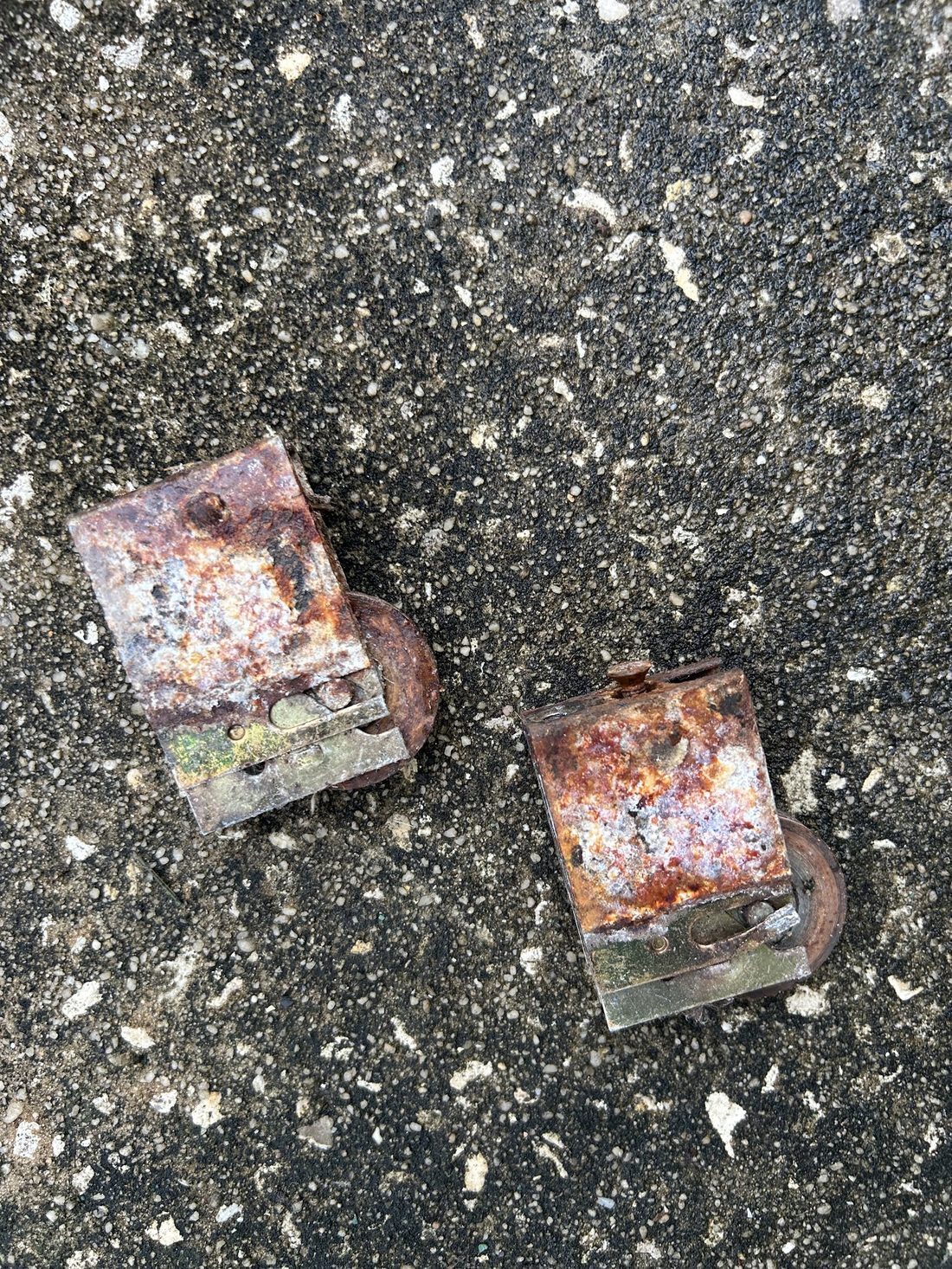
A heavy glazed door that rocks, jumps or leaves its intended path is different from a door that merely feels stiff. Treat it as a loss-of-control problem. Stop operating it, keep people from leaning on it and arrange a controlled inspection.
Do not demonstrate the fault by rocking the panel for a video. A clear photograph of its current position and a description of what happened are enough to begin planning. The priority is keeping the panel supported and the opening appropriately managed, not proving that the symptom can be repeated.
This article concerns the glass-door panel. A lightweight insect screen can also come off its guide, but its hardware and handling are different. If you are unsure which panel is unstable, send an overall photograph before attempting any movement.
What “off the track” can describe
Owners use the phrase for a wheel that has left its running surface, a panel that has become tilted, a loose lower corner or a door that rattles sideways. These are related concerns, but they do not all have the same cause or remedy.
Describe what is visible: one corner lower than the other, a gap that changed suddenly, a panel resting at an angle or a noise followed by lost movement. Include whether the incident happened during ordinary operation, after impact or immediately after service.
Avoid assuming that the panel only needs to be “popped back.” Repositioning without finding why it escaped its intended path can leave the same fault ready to recur. The roller, track, guides, retainers and frame need to be considered as appropriate to that system.
First decisions while waiting for service
Keep children, pets and casual traffic away from the panel. Use another normal access route if available. Do not brace against the glass or insert loose objects to hold the panel in a position they were not designed to support.
Tell the service provider whether the door is partly open, whether weather can enter and whether the property can be secured. Those practical facts affect how the visit is organized. Temporary protection or access arrangements must suit the real opening rather than a generic online instruction.
If the panel is already displaced, do not try to lock it by forcing the thumb turn. Locking hardware is not a substitute for proper support. A door can appear restrained at the handle while another part remains out of position.
Possible causes a technician will separate
The inspection may find a damaged support assembly, an unsuitable replacement wheel, a distorted rail, missing or ineffective retention, excessive clearance or impact damage. These are possibilities to evaluate, not a remote diagnosis of your opening.
Parts catalogs show that sliding-door roller configurations vary substantially.[1] The relationship between wheel and rail therefore deserves attention after any replacement. A wheel can turn and still be unsuitable for the profile or operating position of a particular door.
Also mention earlier symptoms: repeated scraping, a handle that needed lifting, a rough point in travel or a recent track repair. Those details can explain the sequence leading up to the loss of position, while the current condition still determines how the panel is handled.
Why a casual lift-and-reseat attempt is risky
A glazed sliding panel is large, heavy and awkward to support. Its weight is not always obvious from its apparent size. Safe removal or repositioning requires an identified procedure, adequate support and enough appropriately equipped people for the particular unit.
Manufacturer installation guidance separates frame, panel and hardware steps for the product.[2] A repair should respect that assembly sequence and any required stops or retainers. It should not depend on a homeowner lifting the panel by the handle while someone reaches underneath.
Do not remove upper pieces to make lifting easier unless their purpose and the correct service method are established. An unidentified component may be part of panel retention. A procedure appropriate to one sliding door can be inappropriate for another.
Recent repairs change the questions to ask
If the incident followed new rollers, ask how the assemblies were matched and how the final retained position was verified. If it followed a track covering, ask how the changed running surface affected panel height and contact.
The timing deserves prompt review, but it does not by itself prove which part was at fault. A previous repair may have been incomplete, incompatible or unrelated to a separate damaged component. Inspection findings should establish the relationship rather than assumption.
The guide to a door that still sticks after new rollers covers remaining movement faults when the panel is stable. A panel that has already jumped or become unstable should not be operated through that troubleshooting sequence.
Phoenix conditions belong in the history
Report significant dust exposure, a recent monsoon event, an object blown into the opening or water that collected around the sill. A storm can be relevant to what entered or struck the opening without proving the rail or rollers failed from weather alone.
Likewise, afternoon-only binding may have led occupants to use more force before the incident. That history helps identify the preceding operating complaint. It does not make excessive force an acceptable normal method for moving a sun-exposed door.
If the opening serves a busy patio, note how it is normally used and whether accessories or furniture restrict travel. A service recommendation should consider the actual route through the door so the repaired panel is not immediately subjected to the same obstruction or impact.
What a complete correction should establish
The panel needs suitable support, a sound running path, correct clearances and its required retention components. After correcting the cause, a technician should demonstrate controlled normal movement through the intended travel and proper closing.
Ask which component allowed the loss of position and what evidence supports that conclusion. If the answer is uncertain until parts are exposed, that uncertainty should be stated. A clear inspection plan is more useful than guaranteeing a particular repair before the panel can be examined safely.
Manufacturer modification guidance warns that changes must respect the designed product.[3] Drilling, reshaping or removing retention pieces as a shortcut deserves a specific explanation. A repair that merely creates more play can make the door easier to move while worsening control.
Verify function without recreating the failure
The final test should use ordinary operation, not deliberate rocking or an attempt to make the door derail again. Observe whether the panel remains stable, clears surrounding surfaces and reaches the closed position without a lift at the handle.
Ask how maintenance should be performed without disturbing adjustment or retention. Keep the service description and the replacement-part information. If any additional frame or sill work remains, have it documented so you understand the operating limits of the completed repair.
Can I keep using the door carefully?
Do not continue operating an unstable glazed panel. “Carefully” does not restore its support or retention. Arrange inspection and discuss access needs with the service provider while keeping people away from the affected opening.
Is a wobble always a broken roller?
No. Track condition, guides, retention, adjustment and frame damage can also affect stability. The actual support arrangement must be identified before choosing parts or assuming the panel can simply be reseated.
Should I order heavier wheels?
Load suitability matters, but “heavier” is not a complete specification. Housing fit, wheel profile, mounting and operating height must also be compatible. Buying an impressive-looking assembly before diagnosis can leave the real fault unchanged.
Call Saguaro Sliding Doors at 602-560-4705 for emergency sliding door repair in the Phoenix area. Explain that the glazed panel is unstable or displaced, describe its current position and mention any urgent access or security concerns. Service is available 24/7.