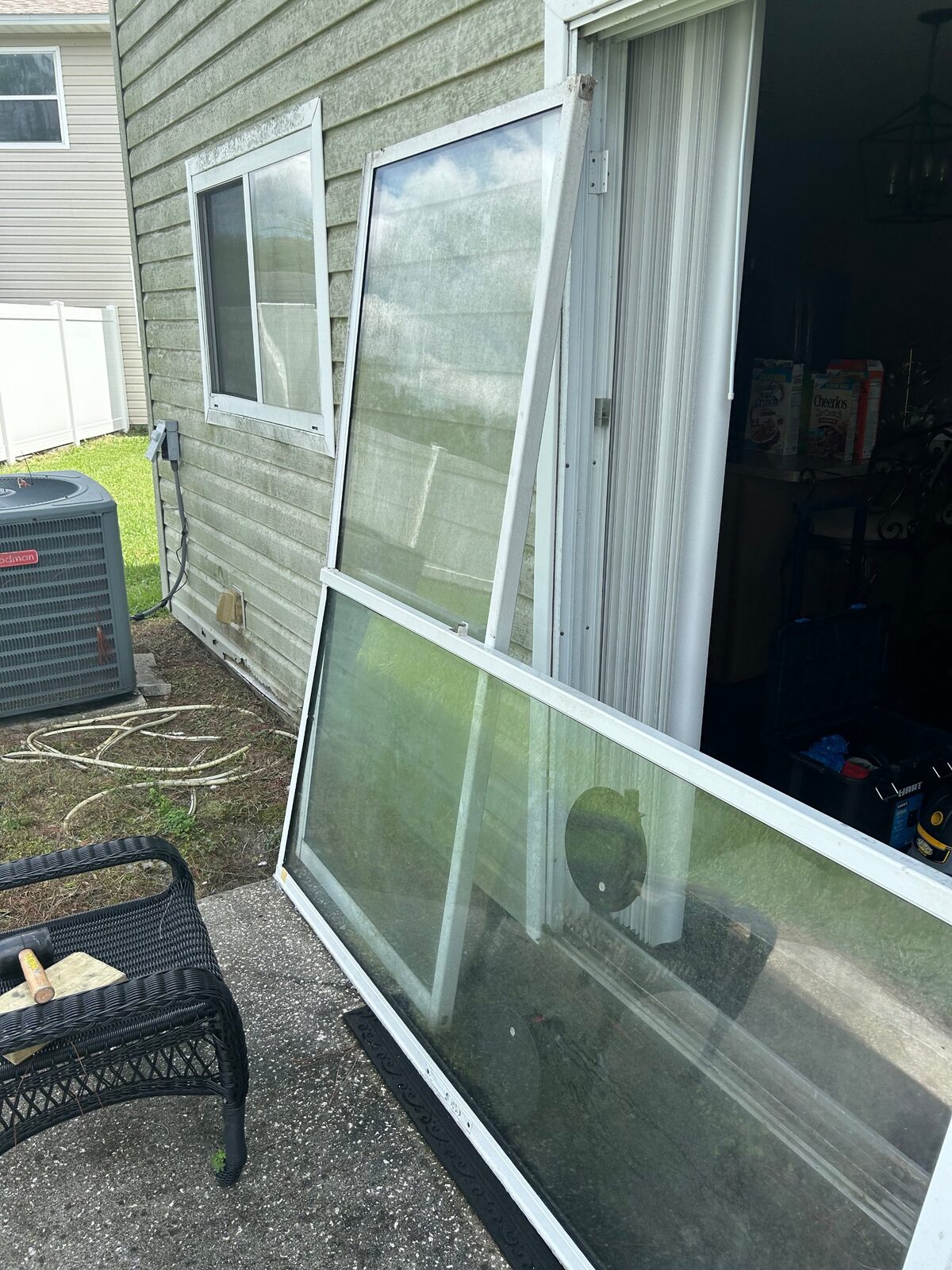
If the screen catches every time you step onto the patio, the whole opening can feel broken. Yet the glass door may be working normally. Start by identifying which panel fails and how it is supported before buying rollers or changing adjustment screws.
Screen systems vary. Some roll on a lower guide; others hang from above or use a different glide arrangement. A repair method copied from a familiar lightweight screen can be wrong for another product that looks similar from the room.
For Phoenix patios, dust, repeated pet traffic and wind exposure can all be relevant to the service history. The useful goal is a screen that stays in its intended path, moves without distortion and closes against the correct edge. New mesh alone will not achieve that if the frame or guides remain damaged.
Confirm that the screen is the problem
Operate the stable glass panel separately using its normal controls. If it moves and secures correctly while the screen catches, keep the diagnosis focused on the lighter system. If both have faults, document them separately.
Look for a bent screen corner, a loose wheel, an obstruction or mesh pulled so tightly that the frame appears distorted. Do not keep pushing a crooked panel until it falls out. A light screen can still be awkward near glass or an elevated opening.
Photograph the full screen and the top and bottom guides. Those views help establish the support arrangement. A close-up of a lower screw alone can be misleading when the operating parts are actually above the panel.
Clean before judging the hardware
Vacuum accessible loose debris from the exposed guide and wipe gently using the product’s care instructions. Keep the glass door closed where appropriate to prevent the cleaning process from sending dirt indoors. Do not force the screen through a hard stop to expose another section.
Andersen’s screen-care guidance includes track cleaning and warns against oil-based residue on its identified products.[1] Follow the instructions for your screen rather than assuming a greasy rail will make any lightweight panel slide better.
After cleaning and drying, compare ordinary operation. If the same corner still drags or jumps, inspection of the frame and hardware is more useful than repeating the cleaning with stronger chemicals. A clean guide cannot straighten a twisted screen frame.
Identify whether adjustment or replacement is needed
An intact roller may need the correct setting; a damaged one may need replacement. Andersen’s roller guidance makes that distinction for specified screen families and explicitly notes that other families use different designs.[2]
That product variation is why screw location, direction and procedure should not be generalized. Do not turn every visible fastener or assume raising the lower corner is always the answer. The guide, spring arrangement and retained position need to suit the identified system.
If removal is part of the owner procedure, follow the actual guide and use suitable help and safe access. Do not borrow a lift-and-pull method from another brand. If the screen is large, damaged or difficult to control, leave removal to service.
Check the frame, not only the wheels
A screen can have serviceable wheels and still bind because the frame is bent, twisted or no longer square. Look at the gap along the closing edge and whether the panel sits consistently in its guide. Do not try to straighten it while installed beside the glass.
Repeated derailment deserves a check of the wheel-to-guide relationship and retained position. Replacing the same small wheel several times may leave the underlying distortion untouched. Ask what caused the panel to leave its path, not only how it will be put back.
If the screen was recently rescreened, mention when the movement changed. Mesh installation and frame condition should be reviewed together. A neat-looking mesh surface does not establish that the panel retained the correct geometry for its opening.
Upper support can change the diagnosis
Pella’s owner manual describes certain wood and fiberglass screen doors as top-hung.[3] On such a system, the lower visible channel is not necessarily where the primary support problem should be sought. Product identification prevents a bottom-roller repair being assigned to the wrong design.
Inspect only what is safely accessible. Do not loosen upper supports or remove a hanging panel while standing beneath an uncontrolled load. Even a comparatively light screen needs a planned handling method when its support is above it.
If the screen is difficult throughout travel but the lower guide looks clean, tell the technician both facts. That observation can direct attention toward the actual support and glide arrangement rather than another round of lower-track cleaning.
Closing and latching are separate from sliding
A screen may glide but fail to reach or engage its closing edge. Check for an uneven approach, displaced edge material or an accessory interfering near the end. Do not use the small latch to pull a distorted frame into position.
If a pet-door insert changed the opening, the screen’s original closing relationship may also have changed. Record that configuration before ordering a new latch. The pet-insert guide explains why accessories can create a fit issue without breaking the original hardware.
After any adjustment or replacement, verify the whole travel and the final closure. A screen that moves well for a few inches but still jumps at the end has a remaining fault. It should stay correctly guided through the intended range.
Phoenix maintenance without overpromising
Inspect after visible dust exposure and when movement changes. A screen near active landscaping or frequent pet traffic may collect debris differently from a sheltered opening. Let the actual condition guide attention rather than waiting for a fixed date while the panel becomes harder to move.
After strong wind, check visible frame condition from safe access before operating a distorted screen. Do not treat mesh damage as the only possible storm effect. A bent guide or corner can be the reason the panel no longer closes normally.
Screen mesh is not a substitute for secure glazing, a structural barrier or an appropriate pool-safety arrangement. If the opening has other safety requirements, have them addressed through the relevant qualified advice rather than assuming a repaired insect screen serves those purposes.
Repair or replace the screen assembly?
A sound frame with identifiable hardware may support sliding screen door repair. A substantially bent frame, unsuitable dimensions or unavailable components may justify sliding screen door replacement. The decision should connect to the actual condition, not simply the age of the mesh.
Ask whether the proposed work includes hardware, guide correction, rescreening or a complete panel. These are different scopes. If pet-resistant mesh is requested, confirm that the frame and hardware can accommodate the chosen product without creating a new operating problem.
Keep the screen identification and part information with the glass-door records, but label them separately. That small distinction makes future ordering easier and avoids another round of confusing lightweight screen parts with heavy-panel hardware.
Why does the screen keep coming off its guide?
Contamination, damaged wheels or guides, frame distortion and incorrect adjustment can all be relevant. Repeated reseating without identifying the cause is not a complete repair. Stop forcing it and have the support arrangement checked.
Will new mesh make it slide better?
Not by itself if the cause is hardware or geometry. Mesh work should preserve an appropriate frame shape, while the wheels, guides or hanging system still need their own assessment.
Can the glass-door rollers be used for the screen?
Do not assume compatibility. The systems have different parts and operating requirements. Identify the actual screen product and use its specified or appropriately matched components.
For sliding screen door repair in Phoenix, call Saguaro Sliding Doors at 602-560-4705. Send photographs of the full panel and both guides, and state whether the glass door works normally.