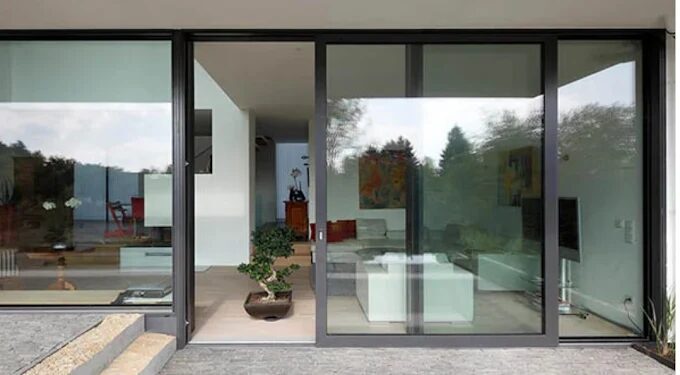
An automatic entrance that stays closed can interrupt access immediately. The cause may be a mode setting, an activation issue, an obstruction or a fault within the door system. Those possibilities require different responses, and staff should not open the powered header to find out which one applies.
Start with the condition of the entrance. If the door has moved unpredictably, contacted someone, damaged its glass or failed a safety check, discontinue its use and arrange qualified service. Protect the route under the site’s appropriate procedures and provide suitable alternative access with the responsible facility personnel.
For a Phoenix business, dust, busy approaches and changing patio or storefront arrangements can be relevant context. They do not justify bypassing a sensor or treating a powered entrance like a stiff residential slider.
Step one: identify the equipment and its normal mode
Locate accessible owner information and note the manufacturer, model and entrance configuration. Do not remove a cover to find a label. A visible identification plate, service record or previous inspection document may be enough to plan the visit.
Check the normal accessible mode indication only as permitted by the owner instructions and your role. STANLEY’s troubleshooting guidance distinguishes automatic operation from modes that intentionally hold its doors open or closed.[1] Other systems can use different controls and labels.
Record what is displayed before changing anything. A photograph of the accessible control and any error message is useful. Randomly trying every mode can erase the original condition and may alter the entrance’s intended operation.
Step two: distinguish no activation from no movement
Does the accessible activation device show its normal acknowledgement, such as an indicator, while the door stays still? Or is there no apparent response at all? Observe only from a safe position under the identified owner procedure.
This distinction helps organize service, but it is not a remote diagnosis. An indicated command does not prove that the operator, locking system and safety inputs are functioning correctly. A silent entrance does not prove the motor has failed.
Do not repeatedly approach an entrance that has behaved unpredictably to see whether it eventually responds. Do not ask customers or employees to act as test objects. The manufacturer’s owner check and qualified inspection govern what can be evaluated safely.
Step three: look for obvious changes around the approach
From safe access, observe moved signs, furniture, merchandise, mats or debris near the entrance. Report recent changes in the approach layout. Do not remove required barriers, decals or safety equipment while trying to improve activation.
If an ordinary loose object can be cleared safely under the owner procedure, document it and follow that procedure. Do not reach into a door path while the system may activate, and do not attempt track cleaning with uncontrolled powered movement possible.
In Phoenix, a dust event or landscaping activity may have changed the immediate environment. Report what actually accumulated or moved. “It happened after a storm” is useful history, but it does not identify the failed component without inspection.
Step four: avoid improvised resets
A reset is not a universal repair. Some owner manuals permit a specific restart under defined conditions; others use different procedures. Follow only the instructions for the identified system and only when it is safe and appropriate to your role.
Repeatedly cycling power after an unsafe event can mask a recurring fault and return equipment to use without establishing its condition. Preserve the error information and report the sequence. Do not reset a breaker that trips repeatedly or open electrical equipment to investigate.
If the entrance remains inoperative or there is uncertainty about safe performance, leave further diagnosis to qualified service. The object is not to obtain one successful opening at any cost; it is to restore normal and reliable operation of the complete system.
What owners should know about safety checks
AAADM provides daily safety-check information for automatic-door owners.[2] The appropriate check follows the actual door’s instructions and should be understood by the responsible staff. A daily observation is different from repair work or a professional compliance inspection.
The record automatic sliding-door owner manual also directs discontinuing operation when safe performance is uncertain.[3] That principle matters when an entrance occasionally works after failing: intermittent operation is not proof that the safety condition has been restored.
Do not invent your own sensor test by standing in the path of a suspect door or adjusting detection range. Arrange qualified evaluation and ask for the correct owner procedure to be demonstrated after the work.
What the technician may need to separate
The inspection can distinguish mode and activation conditions, mechanical drag, locking interlocks, control faults and operator problems. A door that does not move may have a functioning motor prevented from operating by another condition, or a drive fault that needs parts.
Ask the provider to explain which condition is established and what evidence supports it. Automatic door sensor repair, motor and operator repair and automatic sliding door repair are related service categories, but they should not be assigned interchangeably before diagnosis.
Do not order a motor from the symptom “won’t open.” A component replacement should follow the identified system, fault and compatibility requirements. If parts must be sourced, discuss how the entrance will remain appropriately managed in the meantime.
Prepare an incident-style service report
Write down when the failure began, the accessible mode indication, any error message and whether the event followed a power interruption, impact, cleaning or layout change. Include what staff observed before the entrance stopped.
State whether there was unexpected closing, contact with a person or a failed check. Those are material facts, not details to omit because the door later opened once. Tell the provider whether access or security is currently affected.
Send photographs of the full entrance, accessible controls and identification. Do not remove plates or expose wiring to improve the report. Keep customer information and unrelated security details out of images.
Require a complete return-to-service handover
After repair, the entrance needs appropriate safety and functional verification for its configuration. A motor that moves the panels is not the only outcome that matters. Detection, closing behavior, controls and the relevant owner checks also need to be addressed by qualified personnel.
Ask what was repaired, what testing was completed and what staff should observe daily. Request the actual service and inspection records supplied. Do not infer that the provider holds a particular certification or manufacturer authorization unless that has been verified.
Keep the correct contact and instructions at the facility. If a fault recurs, staff should know when to stop use and how to report the original symptoms. The reversing-door guide covers a different failure pattern that may appear during opening or closing.
Common questions
Can staff pull the panels open manually?
Only follow the identified system’s permitted procedure and the site’s access plan. Do not force a powered or locked assembly as if it were a simple manual patio door. Ask the responsible qualified provider when the correct procedure is unclear.
Does no movement prove a failed motor?
No. Modes, activation, interlocks, controls and mechanical conditions can all affect operation. A technician should establish the actual fault before selecting a replacement component.
Can the sensor be disconnected temporarily?
Do not bypass a safety device to restore apparent operation. Restrict use of unsafe equipment and arrange qualified service. A door that moves with a safety function defeated has not been repaired.
For automatic sliding door repair in Phoenix, call Saguaro Sliding Doors at 602-560-4705, available 24/7. Describe the equipment, current access condition and any unsafe behavior so the service can be planned appropriately.