A powered entrance begins moving, hesitates and then jerks forward. The noise may suggest a motor problem, but the symptom does not identify the failed component. Mechanical drag, a guide or support condition, drive components, controls and safety inputs can affect the same visible movement.
Do not keep the entrance in use when movement is unpredictable or safe performance is uncertain. Follow the site’s appropriate procedures to restrict use and arrange qualified service, with suitable access coordinated by responsible facility personnel. A partly functioning entrance is not automatically a safe one.
For a Phoenix business, the useful response is a precise report, not opening the header or spraying the mechanism. Record when movement changes and what happened before the fault appeared. Let the inspection establish which branch needs repair.
Describe what the panels do
Does movement hesitate at the start, at one location or near closure? Does the problem occur in both directions? Do the panels reverse, stop completely or resume after a pause? These differences can help organize diagnosis.
Observe only from a safe position. Do not stand in a suspect opening, hold a panel to feel the force or ask another person to trigger it while you inspect the guide. If recording cannot be done safely, provide a written description and stationary photographs.
Include whether there is a new sound and when it occurs relative to movement. A sound from the header does not prove the motor is defective. Vibration and contact can be transmitted through an assembly, and several faults can exist at once.
Avoid a motor diagnosis from sound alone
A working drive can be trying to move a panel against abnormal resistance. A failed or unsuitable component can also affect how motion is transmitted. Replacing a motor without checking the complete system can leave another condition unresolved.
Ask the technician what establishes the proposed failure. The answer should connect inspection findings, relevant fault information and the identified equipment. A component recommendation should be more specific than “it sounds tired.”
Motor and operator repair is one service category, while drive belt repair and guide or panel work are others. The symptom can justify inspection of several branches without proving all those components need replacement.
Keep the powered header closed
STANLEY’s troubleshooting guidance limits owner action and warns against opening equipment or applying lubrication to the door and header.[1] The header contains the drive and control equipment; it is not an ordinary cleaning cavity.
Do not inspect belt tension by touch, tighten a drive component, adjust controls or move a panel against the operator as an experiment. Product-specific repair requires appropriate competence, controlled energy and verification of the complete system.
Likewise, do not disconnect a safety input to determine whether it is slowing the door. An entrance that moves differently after protection is defeated has not supplied a safe diagnosis or repair. Preserve the current condition and obtain qualified evaluation.
Check what owners can document
Record the accessible manufacturer identification, mode and error indication. Note the current panel position and whether the entrance can be secured under its approved procedure. Do not remove plates to improve a photograph.
Report recent events: impact, cleaning, track contamination, a power interruption, new flooring or changed objects near the entrance. Include any permitted owner actions already taken and their exact sequence.
In Phoenix, dust or water exposure may be part of the context, but do not assume the drive failed because of weather. A clear description of deposits, moved objects or the timing of resistance is more useful than a broad climate explanation.
Mechanical resistance deserves a system inspection
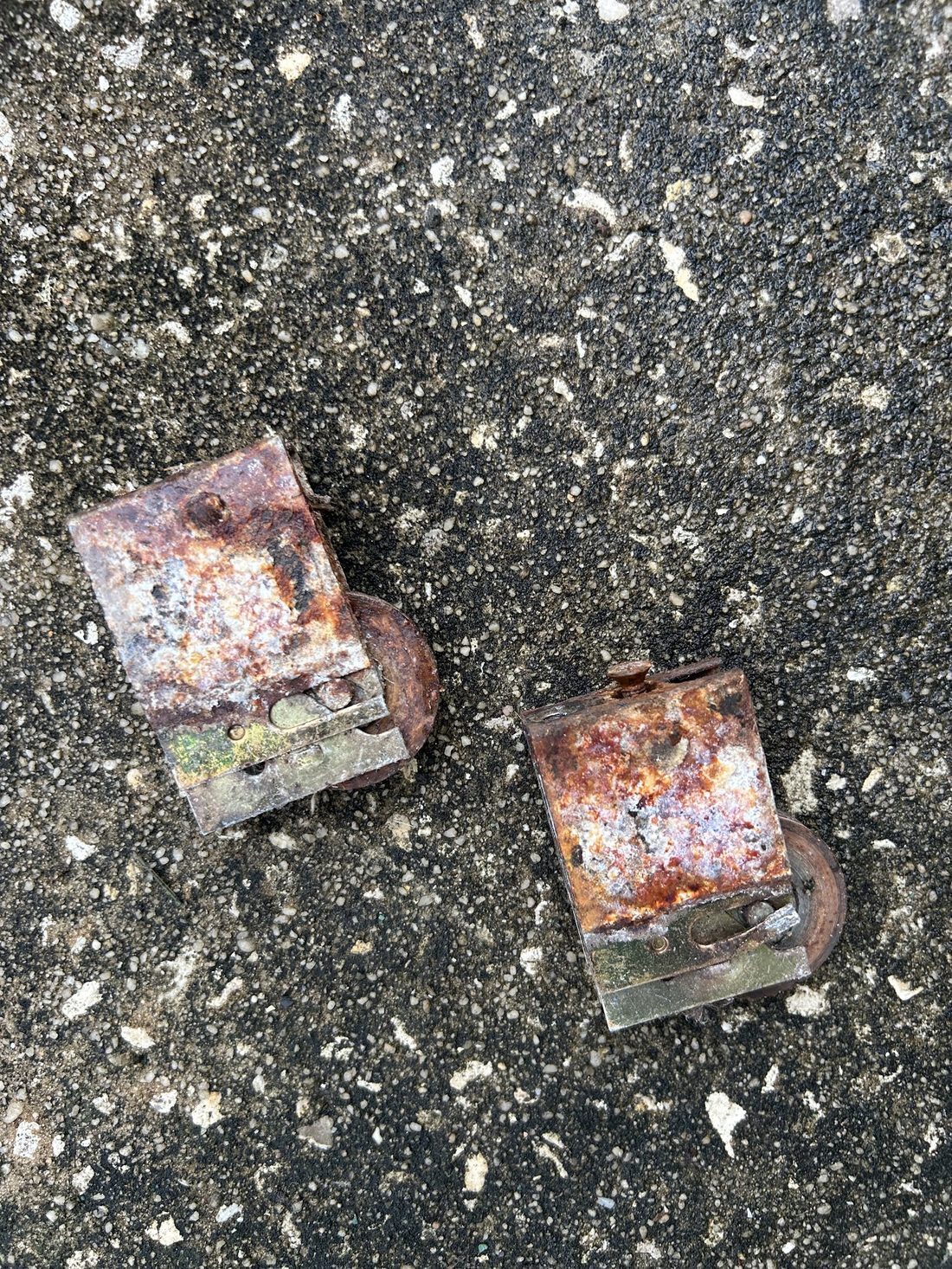
A guide, support or running-path condition can affect controlled panel movement. So can contact with another component. The technician should establish the actual support arrangement and inspect the relevant parts rather than assign a residential patio-door roller repair to powered equipment by analogy.
The record owner manual treats safe movement, controls and safety zones as parts of the complete entrance.[2] A repair should preserve those relationships. A panel that can be made to travel faster is not necessarily restored to appropriate operation.
If the fault is localized, ask what happens at that position. If it is intermittent, ask what evidence was captured and what remains uncertain. Honest uncertainty paired with a defined inspection plan is better than a guaranteed component diagnosis before the mechanism has been evaluated.
Understand the limits of an owner restart
Some identified systems provide an owner restart procedure under appropriate conditions. That is different from repeatedly cycling power until the entrance appears normal. Do not use a reset as permission to overlook unpredictable movement or a failed safety check.
Preserve fault information before any permitted restart. If the system returns briefly and the symptom recurs, report both events. A recurring stall needs diagnosis even if a reset temporarily changes it.
Do not reset repeatedly tripping electrical equipment or investigate wiring. Coordinate the appropriate qualified help when an electrical condition is suspected. The door-service request should state what was observed rather than make an unsupported electrical diagnosis.
Maintenance should follow the actual equipment
Automatic entrance care is not a scaled-up version of patio-door lubrication. Manufacturer resources, such as dormakaba’s US automatic-door service information, separate owner operation, safety checks and professional service.[3] Use the instructions for the installed system.
After repair, ask for a maintenance plan that reflects use, environment and manufacturer requirements. Do not accept an instruction to spray the mechanism whenever it hesitates. A recurring movement fault should trigger an inspection, not become part of the normal staff routine.
Keep the model, component record and completed service information together. Future diagnosis is easier when the provider can see which operator or drive work was performed and which surrounding conditions were inspected.
Plan access while parts are identified
If a specific motor, belt or control component must be sourced, ask how the entrance will remain appropriately managed. The provider should explain what is confirmed and what must be matched to the installed equipment.
Do not push for a merely similar component simply to avoid a return visit. Compatibility includes the complete system and its verification requirements. A fast apparent movement result is not a substitute for the correct repair.
Tell the provider about important access and security needs before work begins. Responsible facility personnel may need to coordinate another route or temporary arrangements suited to the premises. Avoid a universal workaround such as forcing or propping panels.
Require a clear return-to-service record
Ask what caused the stall or jerk, what was repaired and what functional and safety verification was completed. The final demonstration should address the original movement pattern and the complete closing and activation behavior appropriate to the system.
Staff should receive the correct owner-check procedure and normal mode explanation. Relevant qualifications or authorizations should be verified rather than inferred. Request the actual records supplied for the work and any required inspection.
If another condition remains, have it stated clearly with the appropriate operating decision. A replaced belt and an unresolved safety fault should not be presented as an entrance ready for normal traffic merely because the panels now move more smoothly.
Can a belt issue look like a motor failure?
Different drive or mechanical conditions can produce overlapping symptoms. The visible jerk or sound is not enough to name the component. Qualified inspection should establish the fault before parts are selected.
Will more power overcome a heavy panel?
Do not adjust drive settings to overcome unexplained resistance. The cause must be found and the complete system verified. Increasing force is not an appropriate owner troubleshooting step.
Can we use it if the hesitation only happens occasionally?
Intermittent unpredictable movement still requires evaluation. Follow the site’s stop-use decision and manufacturer guidance when safety is uncertain; do not rely on a few normal cycles to dismiss the fault.
For automatic sliding door repair in Phoenix, call Saguaro Sliding Doors at 602-560-4705. Include the manufacturer, accessible error information and the exact stage where the entrance stalls or jerks.